


Electric bikes have completely transformed how people travel across the UK. As we move through 2026, the market is packed with more choices, better technology, and sleeker designs than ever before. From daily commuters dodging city traffic to weekend riders tackling steep country hills, there is a model built for every lifestyle.
With all these options available, knowing what to look for when buying an ebike can quickly become overwhelming. You might be staring at spec sheets full of confusing terminology like watt-hours, mid-drive motors, and torque sensors. If you find yourself asking, “Is it worth buying an e-bike?”, the answer is a resounding yes, provided you select the model that actually fits your specific needs.
This comprehensive electric bike buying guide will break down the essential features you need to consider. We will cover everything from battery capacities and motor differences to UK road laws and smart technology. By the end of this ebike guide, you will be equipped to compare options confidently and ride away on the perfect bicycle.
Understanding the different types of electric bikes
Before looking at battery sizes and motor power, you need to determine how you plan to use your new bicycle. The types of electric bikes available today cater to highly specific riding conditions. Familiarising yourself with these electric bike types will narrow down your search immediately.
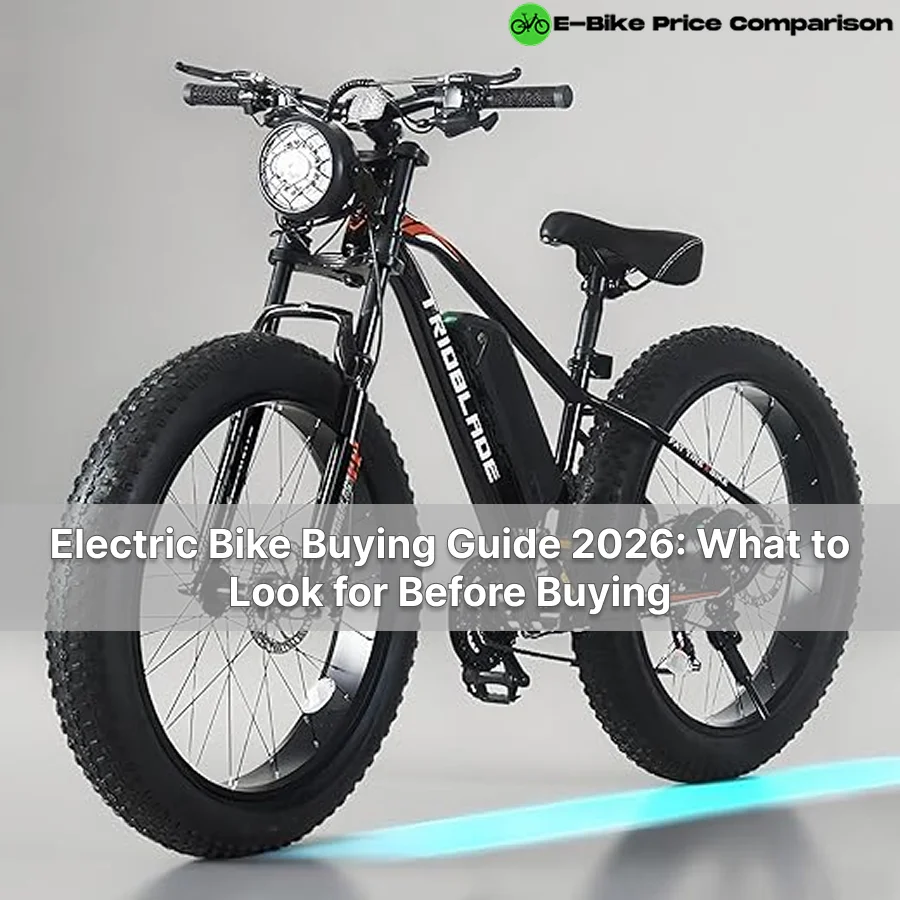
City and commuter e-bikes are built for paved roads, featuring comfortable upright seating and built-in racks for carrying bags. If you have limited storage space or take the train partway to work, folding electric bikes offer incredible convenience. Mountain e-bikes (eMTBs) come with robust suspension and fat tyres to handle off-road trails and steep inclines. Finally, cargo e-bikes act as car replacements, offering elongated frames designed to carry heavy groceries or even passengers.
Electric Bike Battery Capacity and Range
The battery is the beating heart of your e-bike. When evaluating power sources, pay close attention to the watt-hours (Wh), which indicate the total energy capacity. A higher Wh number means a longer range.
If you plan on taking short, flat trips across town, a 300Wh to 400Wh battery will easily suffice. For longer commutes or hilly terrains, look for batteries offering 500Wh or more. Remember that manufacturer range estimates are often calculated under perfect conditions. Real-world mileage will drop depending on your weight, tyre pressure, the steepness of your route, and how heavily you rely on the highest pedal-assist settings.
Charging speeds and expectations
Understanding charging times is a crucial part of any ebike buying guide. Charging speeds depend entirely on your battery size and the charger’s output. A standard 2A charger will fill a common 500Wh battery in about five to six hours. If you opt for a larger 48V 14Ah (672Wh) battery, expect a full charge to take between seven and eight hours. Many riders simply plug their batteries in overnight or during the workday.
Choosing the right motor: Mid-drive versus hub
The motor dictates how natural the power delivery feels as you pedal. You will generally choose between a mid-drive motor and a hub motor.
Mid-drive motors are positioned at the bike’s bottom bracket, right between the pedals. They power the crank directly, allowing the motor to work alongside your bike’s mechanical gears. This setup provides excellent weight distribution, a highly natural riding feel, and superior efficiency on steep hills.
Hub motors sit inside the centre of the rear or front wheel. They are typically more affordable and require less maintenance because they do not put extra strain on your chain and gears. Rear-hub motors are fantastic for flat city commuting, offering a solid push from behind as you pedal.
UK EAPC laws and motor limits
What to know before buying an e-bike in the UK? You must ensure it complies with Electrically Assisted Pedal Cycle (EAPC) rules to be road legal. The continuous rated motor power must not exceed 250 watts. Furthermore, motor assistance must cut off completely when you reach 15.5 mph (25 km/h). The bike must have functional pedals, and you must actually pedal to move forward. Unrestricted throttles are illegal; a throttle is only permitted up to a walking speed of roughly 3.7 mph.
Smart features and 2026 tech integrations
Technology has advanced rapidly, making mountain e-bikes incredibly secure and user-friendly. High-end models now feature integrated GPS tracking, allowing you to locate your bike instantly via a smartphone app if it goes missing.
Anti-theft systems have also become highly sophisticated. Many electric bikes now include electronic motor locks, tamper alarms, and keyless unlocking via Bluetooth. Companion apps let you customise your pedal-assist levels, track your fitness metrics, and monitor battery health directly from your phone. While these smart integrations add to the upfront cost, they offer valuable peace of mind.
Frame design, geometry, and comfort
A powerful motor means very little if the bike is deeply uncomfortable to ride. Pay close attention to frame geometry. Step-through frames remove the high top tube, making it effortless to mount and dismount, which is especially helpful if you are carrying cargo or wearing restrictive clothing. Crossbar frames offer a more traditional, rigid structure favoured by mountain bikers and road cyclists.
Consider the bike’s weight as well. Electric bikes are significantly heavier than standard bicycles, often weighing between 20kg and 30kg. If you need to carry your bike up several flights of stairs daily, a lightweight or folding model will save you a lot of physical strain.
Budgeting for maintenance and warranties
An electric bike is a significant investment, so you need to look beyond the initial purchase price. Replacement batteries can be expensive, and high-torque motors will wear out your brake pads and chains faster than a traditional bicycle.
Always check the warranty details before handing over your money. A reputable manufacturer should offer a comprehensive warranty covering the motor and battery for at least two years. Furthermore, ensure there is a local service network or an accessible bike shop willing to work on the specific brand of electronic components you are buying.
Your final e-bike buying checklist
Finding the right e-bike requires matching technical specifications with your daily reality. Start by clarifying your typical journey, then choose the appropriate frame style. Ensure the battery capacity comfortably exceeds your daily mileage requirements so you are not constantly dealing with range anxiety.
Most importantly, test ride several models. Experiencing the difference between a mid-drive and a hub motor firsthand is the best way to understand what feels right for you. Keep this electric bike guide handy as you visit local retailers or browse ebikepricecomparison.com, and you will be well on your way to making a smart, satisfying purchase.
Take our quiz today to find out what e-bike best suits you.

