


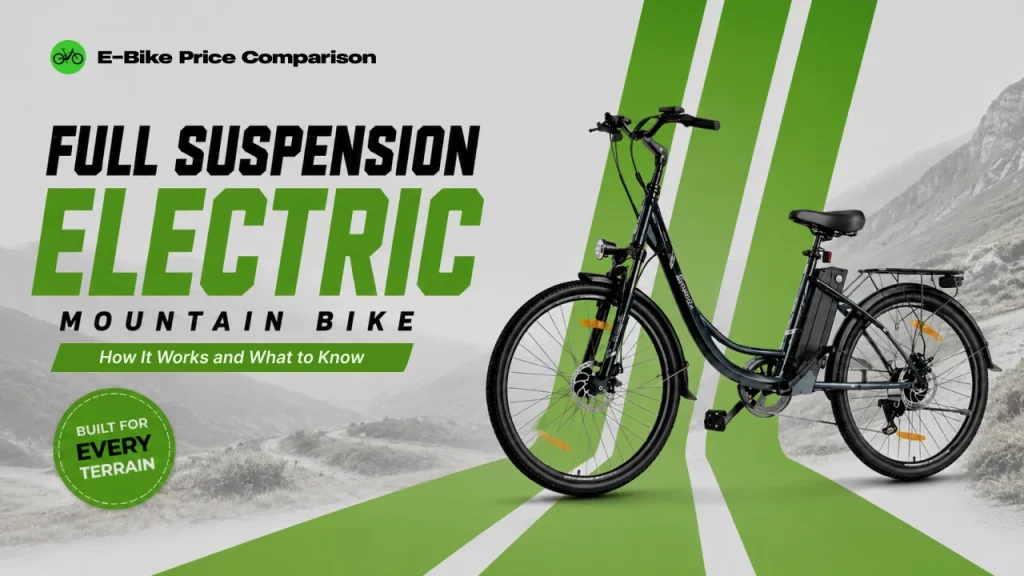
If you have spent any time browsing electric mountain bikes, you have probably come across the term full suspension more than once. It is one of the most important specs to understand before buying an eMTB, yet it is also one of the most misunderstood. In this guide we explain exactly what full suspension means, how it differs from a hardtail setup, how the suspension on your electric mountain bike actually works, and how to keep it running smoothly for years of reliable riding.
What is Full Suspension on a Mountain Bike?
A full suspension mountain bike has shock absorption at both the front and the rear of the frame. The front fork compresses to absorb impacts from the front wheel, while a rear shock, usually mounted between the main frame and the rear swingarm, does the same job for the back wheel.
This is different from a hardtail, which only has a front suspension fork and a rigid rear frame with no movement at all. On a hardtail, every bump, root and rock you ride over at the back of the bike transfers directly into the frame and up through the saddle.
Full suspension exists to solve that problem. By allowing both wheels to move independently of the frame, the bike maintains better contact with the ground, the ride feels noticeably smoother, and you have far more control on technical or uneven terrain.
On an electric mountain bike specifically, full suspension becomes even more valuable. The added weight of the motor and battery means more force travels through the frame on rough ground, so good suspension helps offset that extra weight and keeps the ride comfortable rather than jarring.
Full Suspension vs Hardtail — Which is Right for You?
Choosing between a full suspension and hardtail electric mountain bike comes down to the type of riding you do most often. A hardtail is lighter, simpler and usually cheaper, since there are fewer moving parts to manufacture and maintain. It performs perfectly well on gravel paths, canal towpaths, smooth singletrack and general commuting duties. If most of your riding involves a mix of road and light off-road trails, a hardtail eMTB will serve you well without unnecessary complexity.
A full suspension eMTB makes the biggest difference on rougher, more technical terrain. If you regularly ride rocky trails, root-covered woodland paths or anything with significant elevation change, the rear shock will dramatically improve both comfort and control. You will be able to ride faster over rough ground with less fatigue, since your body is not absorbing every impact directly.
The trade-off is weight and cost. A full suspension frame has more components, more pivot points and generally a higher price tag than an equivalent hardtail. It also requires slightly more maintenance, since there are more moving parts that need periodic servicing.
For most UK riders who mix commuting with the occasional trail ride, a fat tyre hardtail or a budget-friendly full suspension model offers the best balance. For dedicated off-road riders tackling technical terrain regularly, the extra investment in full suspension is well worth it.
How Electric Mountain Bike Suspension Actually Works
Understanding the mechanics behind your suspension helps you get more out of it and spot problems before they become serious. A suspension fork typically uses either a coil spring or an air spring to absorb impacts, paired with a damper that controls how quickly the spring compresses and rebounds. Coil-sprung forks are simple, reliable and cheaper to produce, making them common on entry-level and mid-range electric mountain bikes. Air-sprung forks are lighter and more adjustable but tend to appear on higher-end models.
The rear shock works on the same principle but is positioned to control movement of the rear swingarm. Many electric mountain bikes in the UK at the budget to mid-range price point use coil-sprung rear shocks, which provide reliable, low-maintenance performance suited to everyday off-road riding.
Suspension travel refers to how far the fork or shock can compress, usually measured in millimetres. More travel generally means more capability over rough terrain, but also more weight and a higher price. Most electric mountain bikes designed for general UK trail riding offer enough travel to handle moderate technical terrain comfortably without venturing into specialist downhill territory.
How to Maintain Your Electric Mountain Bike Suspension
Looking after your suspension properly will extend its lifespan significantly and keep your ride feeling smooth rather than harsh or sloppy. Clean your fork and rear shock seals regularly, especially after riding in wet or muddy UK conditions. Dirt and grit that builds up around the seals can work its way into the suspension internals over time, causing premature wear. A simple wipe down with a clean, damp cloth after every muddy ride goes a long way.
Check your suspension settings periodically. Most forks and shocks have a sag setting, which refers to how much the suspension compresses under your body weight at rest. If your suspension feels too soft or too firm, adjusting the air pressure or coil preload to match your weight can make a significant difference to ride quality.
Listen and feel for unusual noises or movement. A suspension fork that creaks, clunks or feels loose at the headset may need the bolts checked for tightness, or could indicate that a service is overdue. Catching these issues early prevents more expensive repairs later.
Have your suspension serviced periodically by a qualified bike mechanic. Most manufacturers recommend a basic service, including a seal and oil change, every 12 months or after a set number of riding hours, depending on how often you ride and in what conditions.
Suspension care is just one part of keeping an electric mountain bike running well. For a complete breakdown of battery care, cleaning, drivetrain upkeep and a full servicing schedule, see our e-bike maintenance guide.
If you are looking for a new electric mountain bike with reliable full suspension, browse our full range of electric mountain bikes and compare specs side by side using our comparison tool to find the right bike for your riding style and budget.
Frequently Asked Questions
Do electric mountain bikes need more suspension maintenance than regular bikes?
Not significantly more, although the added weight of the motor and battery does mean suspension components work slightly harder over time. Following a regular cleaning and servicing schedule is enough to keep an electric mountain bike’s suspension performing well for years.
Is full suspension necessary for UK trail riding?
It depends on the terrain. Smooth gravel paths and canal towpaths are perfectly manageable on a hardtail, but technical, root-covered or rocky UK trails benefit significantly from the comfort and control that full suspension provides.
Can I adjust my electric mountain bike suspension myself?
Basic adjustments like air pressure or coil preload can usually be done at home with the right tools and a little research into your specific fork or shock model. More involved work, such as seal replacement or internal servicing, is best left to a qualified bike mechanic.
What is the difference between coil and air suspension on an eMTB?
Coil suspension uses a metal spring and tends to be simpler, more reliable and cheaper to maintain, making it common on budget to mid-range electric mountain bikes. Air suspension uses compressed air and is generally lighter with more fine-tuned adjustability, but is usually found on higher-end models.

